In addition, the more widespread implementation of digital and technical solutions to improve resource efficiency (e.g. remote meters, energy regulators) and expanding their role in raising citizens’ environmental awareness are seen as important development needs. There is certainly room for improvement in the way that local governments organise the separate collection and recycling of waste.
The study found that the green policy activities of most local governments to date have been rather uneven and haphazard. Infrastructure investment projects (such as building cycle and pedestrian tracks, upgrading street lighting, replacing district heating energy sources, renovating the water and sewerage systems, etc.), which follow national guidelines and are covered by support measures, are implemented most often, but they are not considered part of the green transition at the local level.
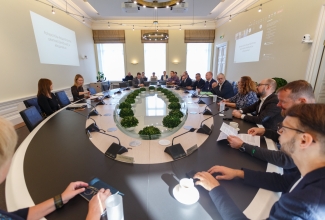
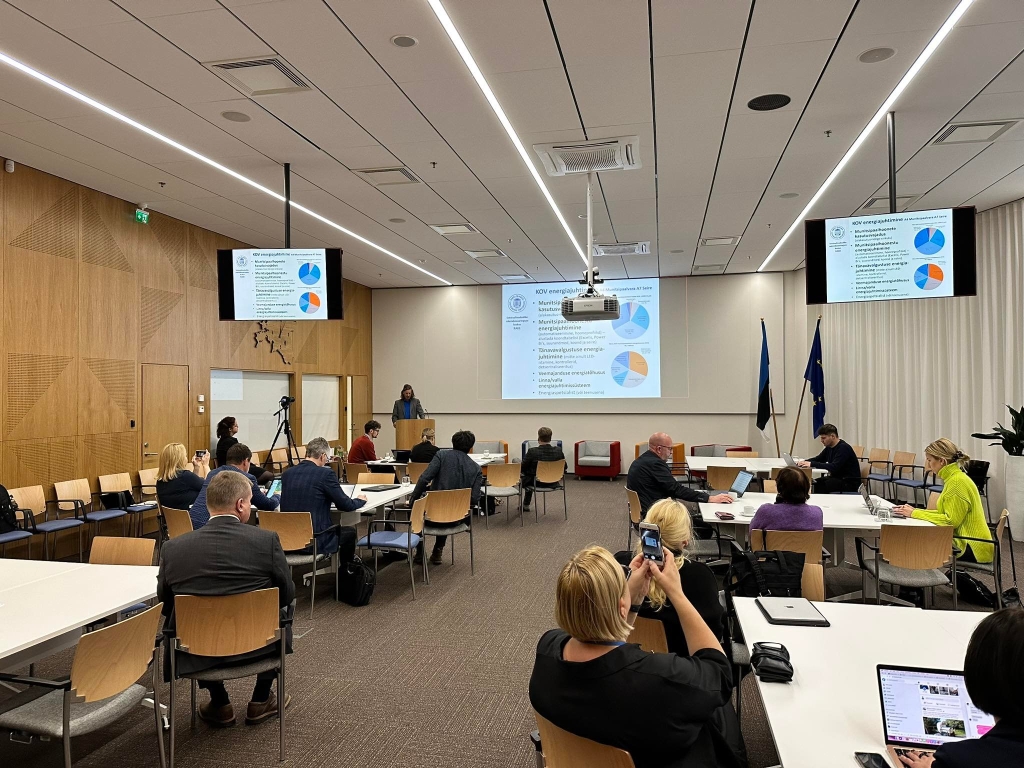
At the event introducing the study, Minister of the Environment Madis Kallas said that we need to be aware of how our everyday decisions and actions affect the environment around us – in governance and in organising local life, as businesses and as individuals. “The Green Deal is not an isolated phenomenon – on the contrary, it concerns everything and everyone. Local governments have already taken numerous important steps in the right direction. In our communities, we can think more about how the Green Deal relates to all strategic decisions, budgeting, and governance,” said Kallas.
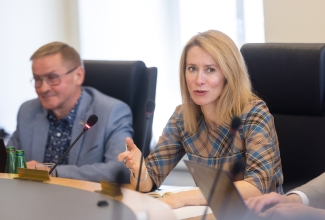
While the study mainly reflects the bottlenecks and challenges ahead for local governments in the green transition, some cities and rural municipalities stand out as already having an impressive plan to adapt to climate change or preserve biodiversity, for example. According to Gea Kangilaski, Deputy Mayor of Tartu, and Vladimir Svet, Deputy Mayor of Tallinn, the planning of cross-sectoral green activities in major cities has been a conscious effort for some time – environmental and climate objectives are taken into account in spatial and transport planning, in the creation of green areas, as well as in adapting to climate change.
According to Gea Kangilaski, state subsidies should take more account of local conditions. “We have both shrinking and growing municipalities. Some are concerned about urban sprawl and others have no residents and no income – climate and energy plans could be a factor that could be used as a basis for subsidies,” Kangilaski commented.
Kerli Lambing, a member of the Lääne-Harju rural municipality government, noted that residents have increasing expectations for the local government regarding developments related to the green transition, and added that the idea of the Lääne-Harju Green Rural Municipality was born from discussions among members of the community committee, for example. One of the authors of the study, Aveliina Helm, Professor of Restoration Ecology at the University of Tartu, also stated that in the implementation of the green transition, local governments can be the so-called grassroots level, where local green innovation is bound to be created to implement activities more wisely.
“Local governments are key to shaping comfortable and modern living conditions for people,” said Minister of Public Administration Riina Solman. “However, it is increasingly important to pay attention not only to people’s well-being, but also to ensuring that the planning of the living environment is in line with an environmentally friendly approach. This benefits both local residents, who can enjoy green urban or rural spaces, and our climate health as a whole. It is commendable that such comprehensive and practical instructional materials have been provided to local governments on how best to do this. The website minuomavalitsus.ee of the Ministry of Finance gives a good overview of how many local governments are already paying very close attention to these important issues today. I hope that the created instructional material will help more local governments interpret this issue for themselves, because in the current security and energy crisis, wasting resources is not good for anyone.”
Fulfilling the Green Deal and the goals of Estonia’s national green policy based thereon is a challenge and a process to which all sectors driving the development of society, levels of governance, and the socio-economic partners involved can contribute in the coming decades. The implementation of the green policy at the level of local governments will certainly be supported by the Green Policy Action Plan, which will be subject to public consultation soon and is expected to be approved by the end of the year.
- The main objective of the study was to identify the role of local governments in the implementation of the green transition in Estonia. Based on the results of the study, recommendations were formulated regarding the conditions that would put local governments in a good position to play this role effectively. Another important output of the work will be the tools supporting the design, implementation, and monitoring of the green policy of local governments (guide, system of recommended indicators).
- The analysis was carried out and the instructional material was prepared by the Centre for Applied Social Sciences (CASS) of the University of Tartu. Both can be found on the website of the Government Office: