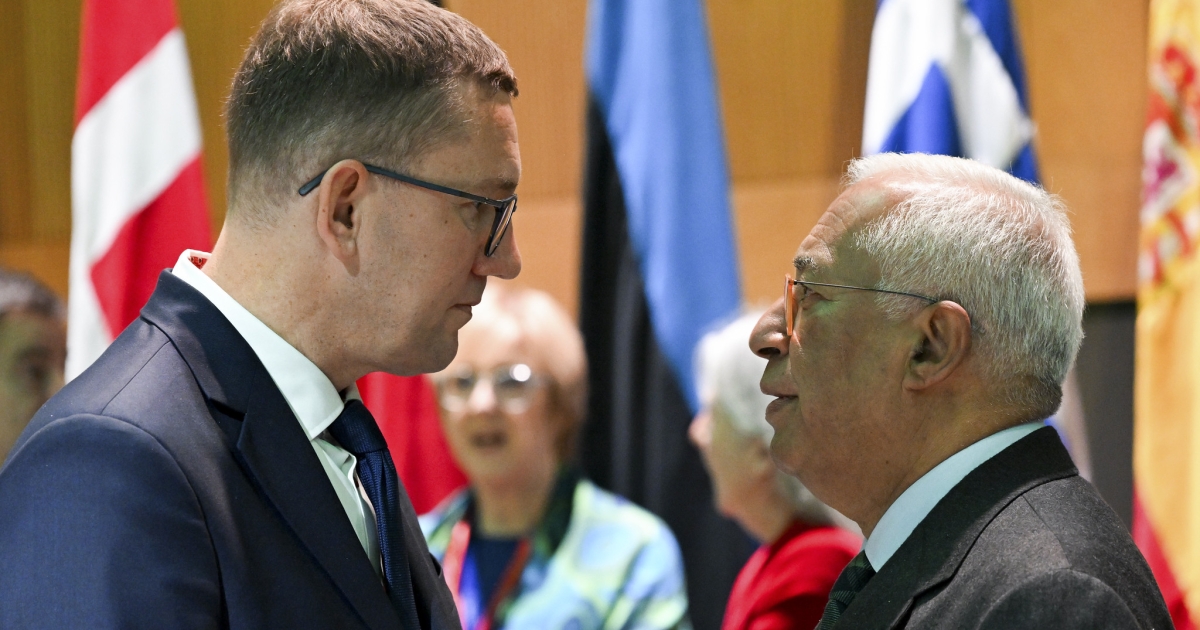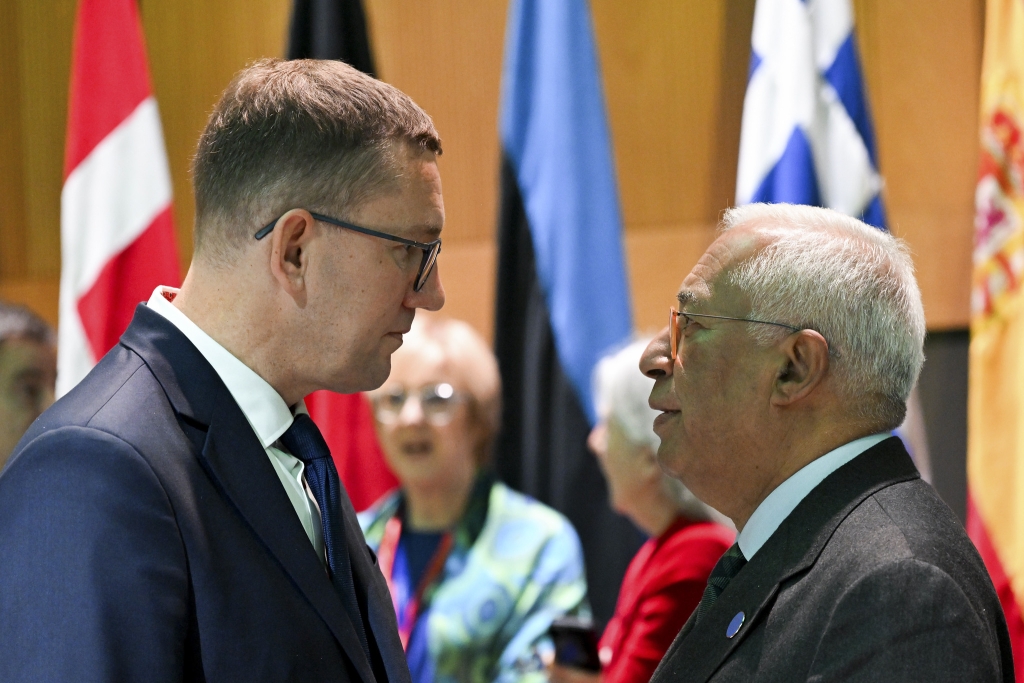
“Putin wants us to discuss his wish list instead of focusing on achieving peace in Ukraine. We have nothing to discuss with Russia about the European security architecture; it is working just fine. If we wanted to make any changes to it, they would only be that Ukraine becomes a member of the EU and NATO and that Russia stops killing people. That was also my message to the heads of state and government: let us focus on what matters – peace in Ukraine – and not be distracted by Putin’s attempts to divert our attention,” Michal said at the informal meeting of the European Council held in Dublin on Friday.
The European Union institutions and the E5 – France, Germany, Italy, Poland and the United Kingdom – represent Europe in the Ukraine peace talks. According to Michal, EU leaders, European Council President António Costa and the European Commission, as an institution, have a responsibility to coordinate and represent the positions jointly agreed upon by the Member States.
“While active discussions on peace are taking place in various capitals, Russia continues to attack Ukraine. Ukraine faces a very difficult winter. The European Union must find the resources to help Ukraine get through it and ensure that it has everything it needs to defend itself,” Michal said. “Estonia is providing Ukraine with an additional €6.5 million. Of this, we will send locomotives worth €4.5 million to Ukraine, while €2 million will be allocated to support the SPUR 2.0 wartime recovery programme.”
In Dublin, European leaders also discussed how to keep pace with the United States and China in the development of artificial intelligence. The discussion was attended by Mistral CEO Arthur Mensch and Professor Geoffrey Hinton, one of the pioneers of artificial intelligence. Topics included investment, growth opportunities for European companies, the use of data and the oversight of increasingly powerful AI models.
“Artificial intelligence can bring great benefits to a few or raise the level of society as a whole. Europe must strive for the latter. We must not replace our dependence on imported fossil fuels with dependence on foreign artificial intelligence,” Michal said.
According to the Prime Minister, the European Union has two major advantages: its large single market and its data. Now, these need to be put to better use. “We cannot remain merely users of artificial intelligence developed by others. We must also have strong companies and technologies of our own. We need to make it easier to invest in our companies. Businesses need capital, computing power and the opportunity to grow across the entire European Union market,” Michal said.
Michal said that achieving this would require cooperation with trusted partners and making better use of Europe’s trade and economic relations. Investment must also be directed towards areas in which Europe has the potential to succeed globally, such as robotics, autonomous vehicles and smart healthcare solutions.
The Prime Minister also emphasised the need to jointly mitigate the risks associated with artificial intelligence. “Artificial intelligence is developing rapidly, and its impact extends beyond national borders. We must already be thinking about how to independently test the most powerful models and ensure that they remain under human control,” Michal said.