
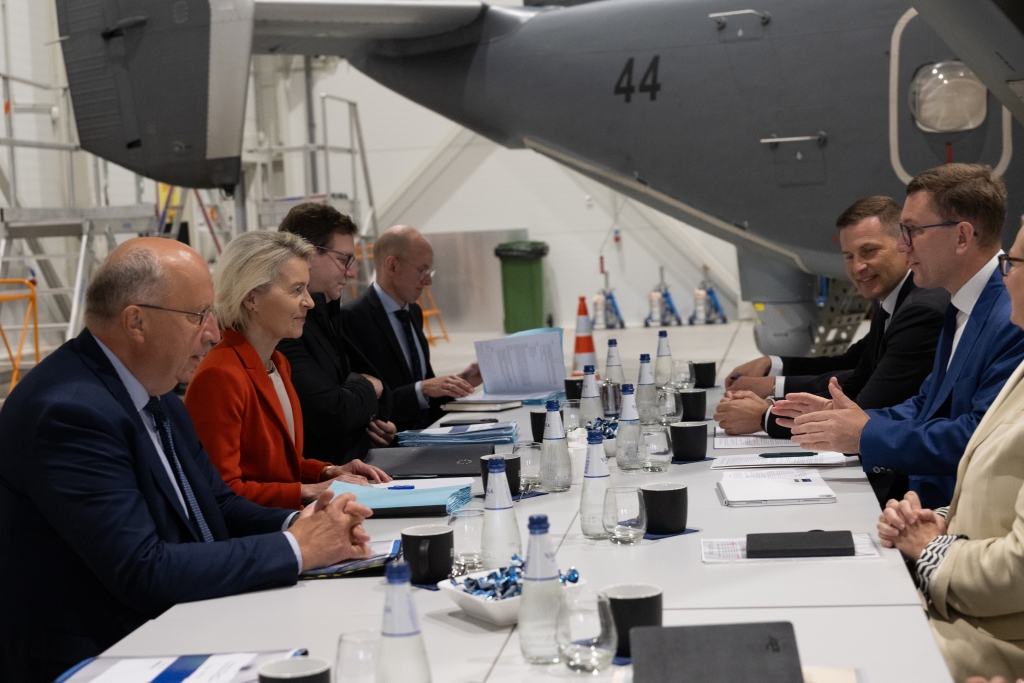
The head of government remarked that although security was not a focus of the EU for a long time, bold and much-needed decisions have been taken in recent years to improve Europe’s defence capabilities.
“A good example of this is the European Commission’s SAFE financial instrument,” he noted, which he says Estonia plans to utilise to borrow up to 3.6 billion euros in the coming years to finance an increase in defence spending to above 5% of GDP. He also praised the European Commission’s proposal for a new EU budget, which foresees additional EU funding for both defence and cross-border connections.
Nevertheless, Prime Minister Michal feels that extra money should be found for defence ahead of the next budget period. “There has been no improvement in the security situation,” he cautioned. “We need to go further in our support for those countries that invest more in Europe’s collective security.”
The head of government said that recent drone incidents have highlighted the need for air defence capabilities to be enhanced. “Estonia is doing that, but additional EU support would allow us to build a strong drone wall more quickly and keep our common external border secure,” he stated.
How the European Union could further support Ukraine in Russia’s war of aggression was also discussed at the meeting. “Russia is continuing – in fact intensifying – its brutal attacks on Ukrainians, even those far from the front line,” he remarked. “This clearly shows that Putin is not seeking peace.”
Prime Minister Michal stressed that pressure on Russia must be stepped up. “That means tougher sanctions and an increase in military support for Ukraine on our part,” he said, also advocating for the use of frozen Russian assets for the benefit of the beleaguered nation.
“We also need to move quickly on Ukraine’s EU accession negotiations, because the Ukrainians have done their homework,” he added.
Following their meeting, Prime Minister Michal and President von der Leyen made a tour of Ämari airbase, where they were acquainted with the equipment used by the Estonian Defence Forces and allies in the country, as well as the output of local defence industry companies. The meeting was also attended by Estonian Defence Minister Hanno Pevkur and European Commissioner for Defence and Space Andrius Kubilius.

