My fellow Estonian, pioneering AI investor Jaan Tallinn, recently described the main players in the global AI race: US AI companies, the governments of the US and China, and the rest of the world.
His concern was that the rest of the world is asleep at the wheel.
I would like to think that he was not talking about Estonia. But we all need to wake up.
To make the most of AI, we must act on three fronts: power, trust and security.
First, power.
AI is changing the global balance of power. The US and China are investing heavily in it. Global investment in AI computing power is approaching one trillion dollars a year. Most of that money is going to the US.
Europe needs the ability to build AI power, not just buy it. Otherwise, we risk depending on others for the technology that will shape our economy and society.
The EU plans to invest 200 billion euros in AI, including gigafactories. This is a step in the right direction. But we also need to make it easier for companies to raise money and invest in Europe. We need stronger EU capital markets.
European companies are already spending a tenth of their investment on AI.
Europe has paid a high price for depending on Russian energy. We should not make the same mistake with AI. We must be able to develop and build the technologies that will shape our future, not just depend on others to provide them.
Second, trust.
In Estonia, we want AI to help everyone, not just a few.
Our goal is to double the value of work done by Estonians by 2035.
Thirty years ago, we laid the foundations for our digital society. We changed the way our country works. Now we want to take the next step with AI.
Technology alone does not change society. People do. And people need to trust the technology they use.
That is why we are giving 100,000 people the chance to learn how to use AI in their daily work by the end of next year. That is one in seven working people in Estonia.
Our Eesti.ai initiative will also help identify practical applications of AI and bring them into wider use in hospitals, schools, public services, and businesses.
Our secure digital ID helped make Estonia's online services possible. Now we are preparing the rules we need for AI agents.
Who is accountable when an AI agent acts? If an agent prepares your tax return or pays your bills, we need to know what it is allowed to do, what it has done, and who is responsible.
That is the principle of our e-state. It must also guide our use of AI.
Third, security.
AI becomes more powerful every day. We must make sure people stay in charge. This is why I signed the Call for Control of Frontier AI Models, together with leaders from more than 30 countries, and the European Commission.
We have many like-minded partners from around the world here today. Together, we can find better solutions and strengthen our ability to act. I invite those of you who have not yet done so to join us in endorsing this Call.
AI does not stop at national borders. Neither should the rules for keeping it under human control. This is also a matter of our shared security.
We need to work with partners well beyond our own region. Countries may be far apart on the map, but we face many of the same challenges. We can learn a lot from each other.
Estonia is doing its part. This year, we are co-leading the UN Global Dialogue on AI Governance. We are also chairing the Digital Nations, a network of leading digital governments.
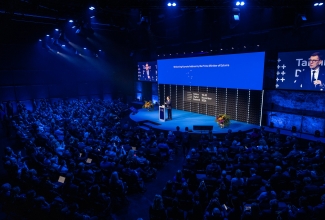
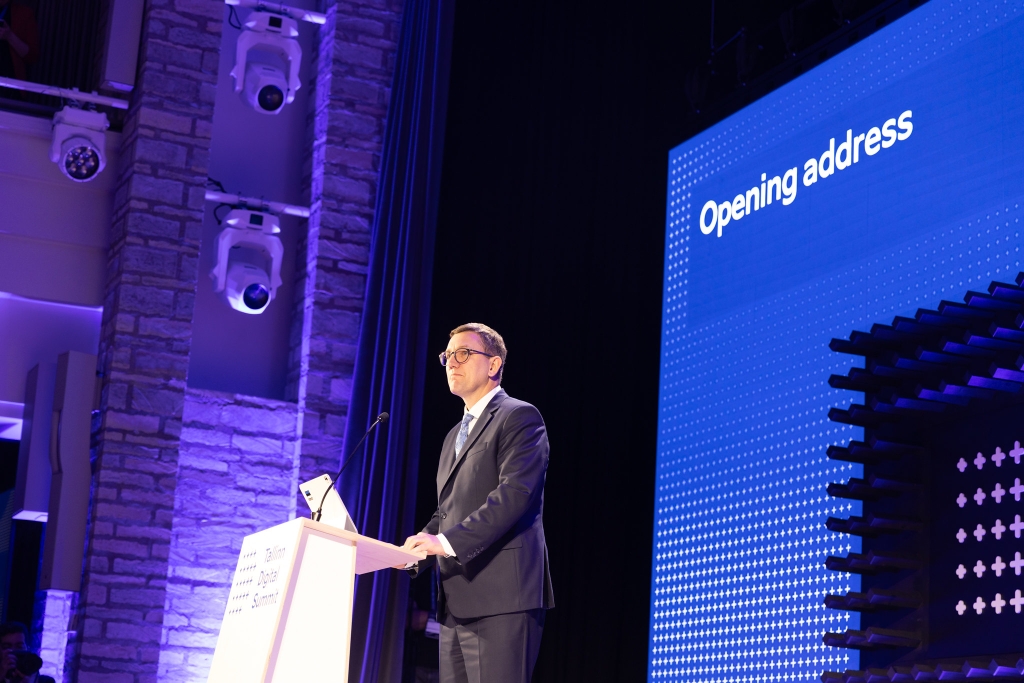
The network’s Ministerial Summit is taking place here today at Tallinn Digital Summit.
We look forward to welcoming Brazil to this growing network of partners.
Security also means defence. Ukraine has shown that technology can change warfare faster than governments can change their plans. Democracies must be able to innovate just as fast as those who threaten us.
Ladies and gentlemen,
Estonia has never been afraid to embrace new technology. We know that even a small country can help shape big changes.
We cannot build that future alone. Everybody in this room has an important role to play. We must shape this change, not just adapt to it.
AI can give more power to many. Or it can put more power in the hands of a few.
That choice is ours to make.
I wish you good discussions and even better ideas.
With that, let me turn to my colleague, Prime Minister Jonas Gahr Støre of Norway, who will now address us by video.
Thank you.