
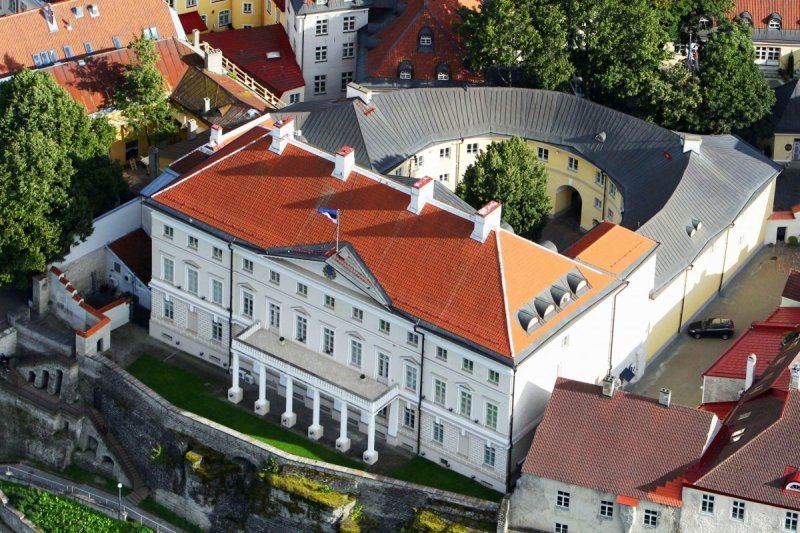
Stenbock House, 3 December 2020 – At today’s cabinet meeting, the Government agreed on the principles for using foreign financing: a human-centred recovery and reinvigoration of the economy and introduction of innovations.
“Next year, when the health crisis stabilises and the vaccines arrive, will be the year of recovering Europe and reinvigorating the economy,” Prime Minister Jüri Ratas said. “Europe must quickly agree on the next long-term budget of the European Union and apply the economic recovery plan. The people and economy of Estonia and the whole Europe need recovery plans to feel safe about the future and have a chance to come through this crisis.”
In addition to the structural instruments, the Recovery and Resilience Facility (RRF) and the Just Transition Mechanism (JTM), the government’s agreement involves the use of additional resources from the structural instruments of the current period (REACT-EU) and sales revenues from carbon emission trading. The decisions made today do not involve the resources of the common agricultural policy, the maritime and fisheries fund, and internal security funds: these are yet to be discussed in the government.
According to Minister of Finance Martin Helme, the Estonian economy could be more sustainable in the face of potential future crises. “Financial support will help us recover from the crisis quicker, but that is not all. Additional financing will enable us to support long-term economic changes and innovations,” Martin Helme said. “This can be done by supporting enterprises: promoting the implementation of new technologies, product development, and more efficient use of resources. We also wish to improve the capabilities of the health care sector, offer improved labour market and social welfare services, and help people in need with food aid.”
In resource distribution, the government considered the national recommendations of the European Semester and the “Estonia 2035” strategy which is focused on future reforms and investments. Everybody who wished to be involved in shaping the Estonian future had a chance to participate in preparing the “Estonia 2035” strategy. It was compiled as a result of a number of proposals made during comprehensive discussions.
The “Estonia 2035” strategy is focused on an intelligent, active, and health-conscious person; an open, caring and cooperative society; a strong, innovative, and responsible economy; a safe and high-quality living environment that considers everybody’s needs; and a trustworthy and human-centred governance.
The objectives of using structural supports must be discussed with the European Commission; the strategy for using recovery finances must be approved by the Council of the European Union, which comprises representatives of member states.
The government made principial decisions on the following sources of financing, the use of which will be further discussed:
The broader objective of structural funding is to support regional development, economic growth, and social coherence. Estonia will get three billion euros over a period of 2021–2027 which will be invested into achieving five major goals:
1) smart Estonia (717 million euros): supporting innovation, research, competitiveness of small and medium-sized enterprises, the development of digital abilities, and the development of the e-state;
2) green Estonia (795 million euros): supporting the improvement of resource-efficiency, making energy-consumption more economical, adapting to climate changes, circular economy, applying more economical transport solutions, and water resource management;
3) connected Estonia (564 million euros): supporting environmentally sustainable transport, highways, and faster internet connection;
4) social Estonia (574 million euros): supporting, among other things, an adjustment of studies to the needs of the labour market, social and healthcare investments, long-term care, the Estonian language, and integration;
5) human-centred Estonia (264 million euros): supporting urban development, regional entrepreneurship, and local public services.
See also the principles of Estonian financing priorities: https://www.rahandusministeerium.ee/sites/default/files/Valistoetused/uk... (PDF)
The resources from the Recovery and Resilience Facility (RRF) for Estonia are 1.106 billion euros without requiring national co-financing. 20% of the total amount must be invested into supporting the digital transition and 37% must be used to support the green transition. The decisions to support specific projects must be clear by the end of 2023, and investments and operations must be complete by July of 2026. The objective of RRF is to support the reforms and investments relevant to the European Semester, which includes areas that involve economic, social, and regional cohesion, green and digital transition, healthcare, competitiveness, resilience, education and skills, scientific research and innovation, and the stability of financial systems.
See a detailed overview of RRF: https://www.rahandusministeerium.ee/sites/default/files/Riigieelarve_maj... (PDF)
REACT-EU was established to resolve the coronavirus crisis and to contribute to the green, digital, and sustainable transformation of the economy of the European Union by supporting the preparedness of the healthcare sector, enlivening the economy, offering support to the labour market and social involvement measures, and giving food and other aid to people in need. Estonia will receive 177.3 million euros through REACT-EU, and generally, this does not require national self-financing (except when supporting projects which must conform to the rules of state aid, including own contribution). The resources from REACT-EU are available in 2020–2023. These are added to the structural supports of the current budget period.
The Just Transition Mechanism (JTM) will support Estonia with 340 million euros to relieve economic and social consequences in regions that require the most support in transitioning to a less polluting economic model. In Estonia, this mostly concerns Ida-Virumaa and its neighbouring areas, and this support measure will help to achieve a more sustainable economic development in this region.
To implement the measures of climate and energy policies, we can use the revenues from carbon emission trading and, as of 2021, the resources from the Modernisation Fund (MF). The precise capacity of both sources will depend on the unit price of the CO2-quota that is constantly changing. Climate and energy policy measures will get 50% of the carbon emission trading revenue that, in 2021, is prognosed to be 29.5 million euros. This will presumably be used to support audits for a more sustainable resource utilisation in larger agricultural enterprises and to apply renewable energy solutions in schools. The Estonian share of the Modernisation Fund will presumably be used for supporting the energy sufficiency programme for public sector buildings and the low emission public transport development programme in an indicative amount of 19 million euros in 2021, and 21 million euros in 2022.
Read more on the planned distribution of resources: https://www.rahandusministeerium.ee/sites/default/files/Valistoetused/va... (PDF)
The EU budget will help us to recover and renew the economy
03.12.2020 | 00:00
Gallery
News

