
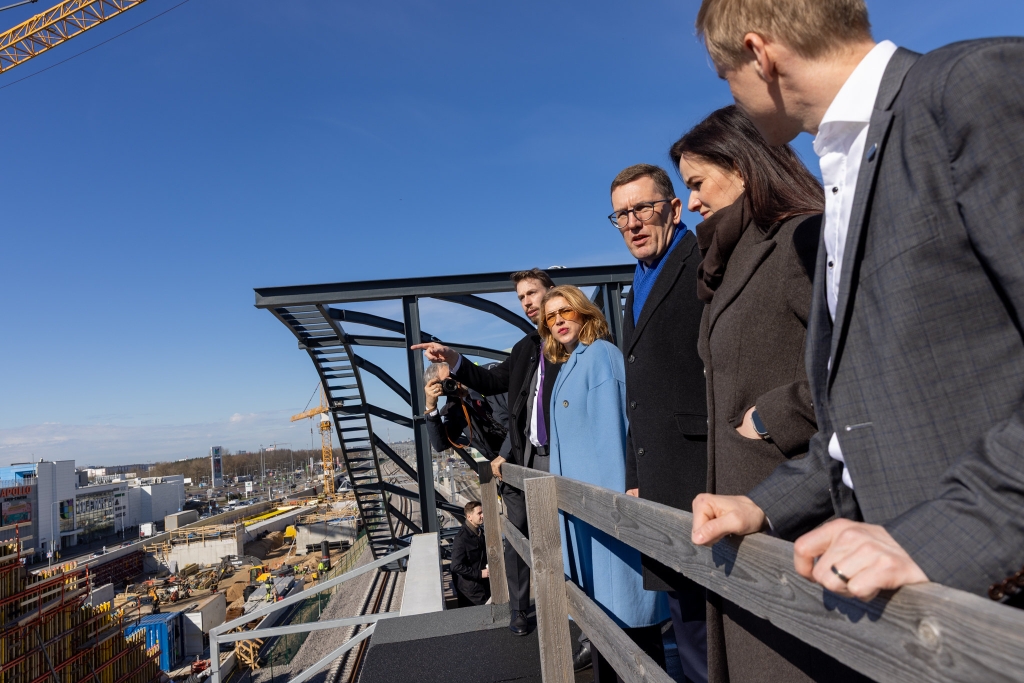
In the morning, Prime Minister Kristen Michal visited the construction site of the Ülemiste terminal of Rail Baltica with his Latvian and Lithuanian counterparts Evika Siliņa and Inga Ruginienė, where they were briefed on the course of the project. “Estonia is making swift progress,” the head of government noted. “We want to have completed the main line by 2030 and to secure maximum EU funding for the project. The Estonian state is also actively contributing to its financing, including through the sale of CO₂ quotas. This is an investment that will repay itself in jobs and growth. Even now, at the construction stage, a fifth of every euro invested is making its way back into the budget in the form of tax revenue. Just as importantly, Rail Baltica will bolster our connections with our allies and the supplying of NATO’s eastern flank.”
Estonia had secured more than 60% of first-phase funding by the beginning of 2026. Construction is underway along more than half of the line. Estonia’s national rail operator Elron has also launched a tender for regional trains.
Another issue discussed by the heads of government was the recent drone incidents. “Threats don’t just remain behind borders,” Prime Minister Michal remarked. “That means we have to work together – share more information, be better prepared and calmly explain the situation to the people in our countries. It is also important to ensure robust EU support for the development of our air defences as part of the Eastern Flank Watch initiative.”
The heads of government also stressed that despite the crisis in the Middle East, support for Ukraine must remain a focal point for Europe. “Russia is still a major threat to European security now, and will remain so after the war,” Prime Minister Michal warned. “The EU must seize the moment created by Hungary’s change of direction and take the decisions that are necessary to grant Ukraine the promised €90 billion loan, to move ahead with enlargement – which will benefit all of Europe in terms of both security and the economy – and to approve the next package of sanctions against Russia. We also need to seriously address the issue of preventing the entry into the Schengen area of anyone involved in Russia’s aggression, as that is a growing risk to Europe’s security.”
The impact of the crisis in the Middle East and the Strait of Hormuz on energy prices and the economy was also discussed. This debate then continued in a video conference initiated by President Emmanuel Macron of France and Prime Minister Keir Starmer of the United Kingdom.
Gallery: https://flic.kr/s/aHBqjCRiK6

